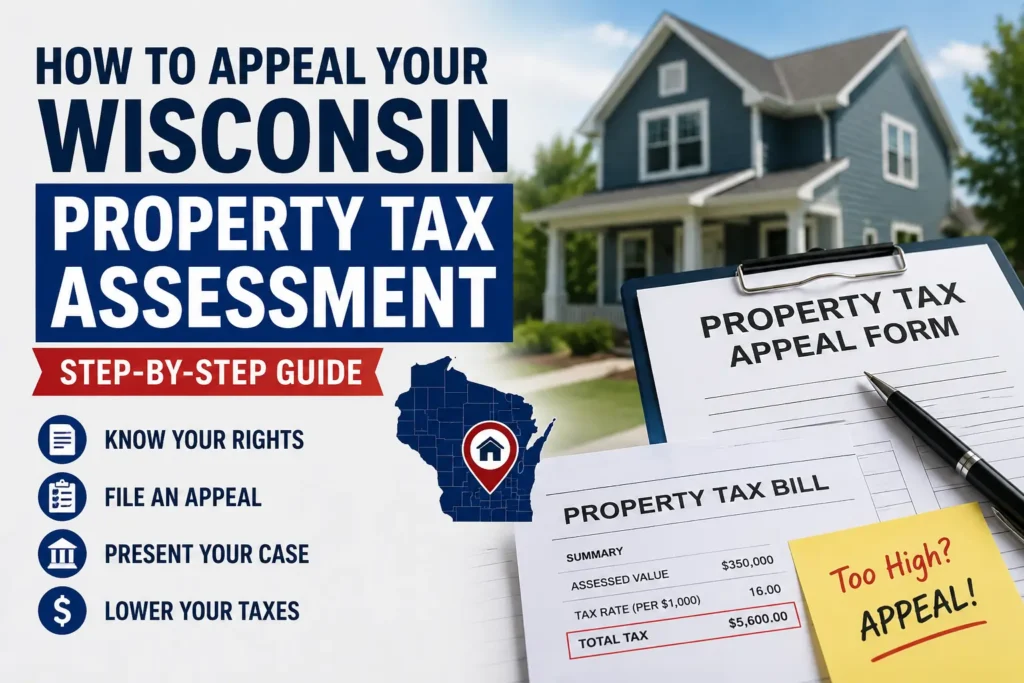
Property taxes are one of the biggest ongoing costs of owning a home in Wisconsin. Whether someone is buying a house, relocating to a different county, investing in property, or planning long-term housing expenses, understanding local property tax rates can make a major difference when comparing costs across the state.
Many buyers focus mainly on home prices when comparing properties, but annual property taxes can also have a major impact on long-term affordability. In some Wisconsin counties, homeowners may pay thousands of dollars more per year in property taxes compared to nearby areas with similar home values.
Wisconsin property taxes vary by county because local governments, school districts, and municipalities set different tax rates based on budgets, public services, infrastructure costs, and community funding needs. Home values also affect annual tax payments, which means two homeowners in different counties may pay significantly different amounts even for similarly sized properties.
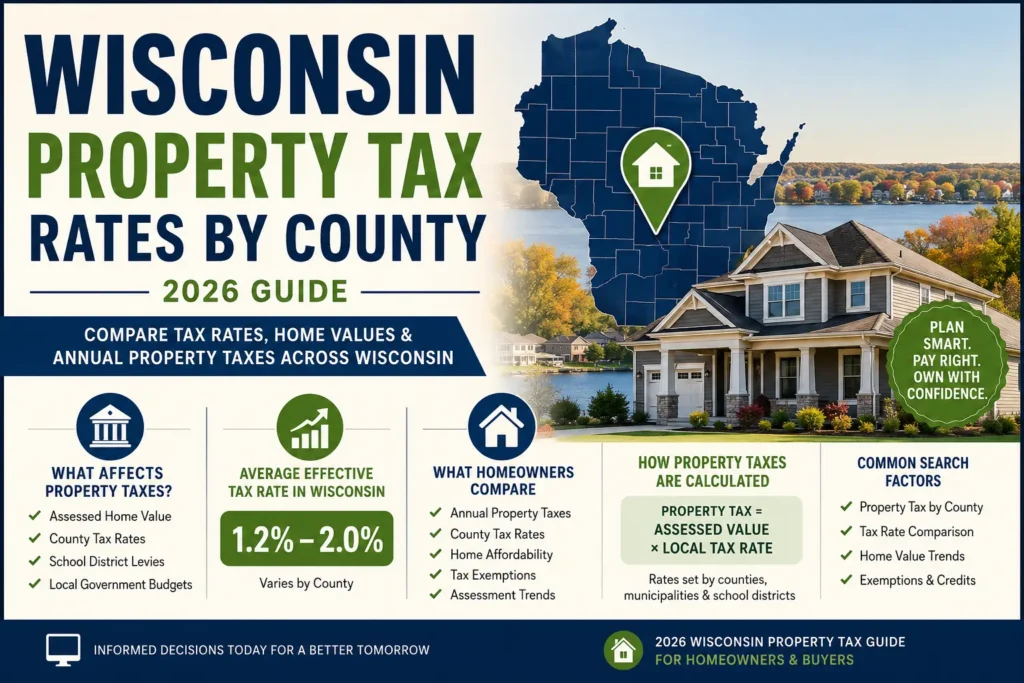
People commonly search Wisconsin property tax data when:
- Comparing counties before buying a home
- Estimating long-term housing costs
- Researching retirement locations
- Reviewing annual tax increases
- Understanding assessment changes
- Comparing investment property expenses
- Looking for lower-tax areas within Wisconsin
Most Wisconsin counties provide public access to property tax information through county treasurer offices, assessment systems, and online parcel search tools.
This guide explains how Wisconsin property taxes work, what affects county tax rates, how annual taxes are calculated, and how property tax costs compare across Wisconsin counties based on median home values and effective tax rates.
Wisconsin County Property Tax Comparison
Property taxes in Wisconsin are calculated using local tax rates and assessed property values. The table below provides a general comparison of estimated county-level property tax trends, including median home values, estimated annual property taxes, and effective property tax rates.
| County | Median Home Value | Median Annual Property Tax | Effective Tax Rate |
|---|---|---|---|
| Milwaukee County | $282,400 | $5,590 | 1.98% |
| Dane County | $421,300 | $6,278 | 1.49% |
| Waukesha County | $456,500 | $5,731 | 1.26% |
| Brown County | $292,700 | $4,362 | 1.49% |
| Racine County | $279,100 | $4,791 | 1.72% |
| Kenosha County | $317,800 | $5,244 | 1.65% |
| Outagamie County | $309,400 | $4,260 | 1.38% |
| Eau Claire County | $301,800 | $4,047 | 1.34% |
| Marathon County | $248,900 | $3,512 | 1.41% |
| La Crosse County | $287,300 | $4,366 | 1.52% |
| Rock County | $256,500 | $4,177 | 1.63% |
| Washington County | $389,400 | $5,009 | 1.29% |
| Winnebago County | $271,700 | $4,185 | 1.54% |
| Walworth County | $353,100 | $4,686 | 1.33% |
| Sheboygan County | $267,500 | $3,908 | 1.46% |
Property tax amounts can change yearly depending on reassessments, school levies, municipal budgets, and local tax decisions.
Why Wisconsin Property Taxes Vary by County
Property taxes are not identical across Wisconsin because each county and municipality manages different local funding needs.
Several factors influence county property tax rates, including:
- School district funding
- Local government budgets
- Public safety and emergency services
- Infrastructure and road maintenance
- Property values within the county
- Special local levies or district taxes
Urban counties with larger populations and higher public service costs often collect more property tax revenue compared to smaller rural counties.
At the same time, counties with rapidly rising home values may still maintain moderate effective tax rates because higher assessments increase the taxable base.
Homebuyers moving from states with lower property taxes may notice that some Wisconsin counties have comparatively higher annual tax obligations even when home prices appear moderate. This is one reason many buyers compare both effective tax rates and yearly payment estimates before purchasing property.
Counties With Higher Property Taxes in Wisconsin
Some Wisconsin counties consistently report higher annual property taxes due to a combination of stronger home values and local tax levies.
Milwaukee County
Milwaukee County typically has some of the highest effective property tax rates in Wisconsin. Local school funding, city services, infrastructure costs, and dense population areas contribute to higher annual property tax obligations for homeowners.
Properties located near urban service districts or highly developed areas may also experience larger tax burdens because local governments often maintain broader public infrastructure and municipal programs.
Dane County
Dane County, which includes Madison, has experienced strong property value growth in recent years. Although effective tax rates are not always the highest statewide, rising home values often increase annual tax payments.
Rapid development and continued housing demand have also contributed to increasing assessments in many parts of the county.
Kenosha and Racine Counties
Kenosha and Racine counties also report relatively high property taxes compared to many surrounding areas. Local budgets, suburban growth, and assessment increases contribute to annual property tax costs.
Homeowners researching southeastern Wisconsin often compare these counties carefully because even small differences in effective tax rates can significantly affect long-term housing expenses.
Wisconsin Counties With Lower Property Tax Burdens
Some counties maintain lower effective property tax rates or lower median annual tax payments due to reduced home values, smaller local budgets, or lower population density.
Counties with more affordable property markets may provide lower annual tax obligations for homeowners looking to reduce long-term housing costs.
However, lower taxes do not always mean lower home prices, since assessed values and local levies both influence yearly tax amounts.
In some rural counties, homeowners may benefit from lower overall annual taxes even if effective rates remain relatively similar to statewide averages because property values are often lower than highly developed metropolitan regions.
Retirees and first-time buyers sometimes compare these lower-cost counties when researching affordable long-term housing options within Wisconsin.
How Wisconsin Property Taxes Are Calculated
Wisconsin property taxes are based on a property’s assessed value and the local tax rate set by counties, municipalities, school districts, and other taxing authorities.
The general calculation is:
Property Tax=Assessed Property Value×Local Tax Rate
For example, a property assessed at $300,000 with a combined effective tax rate of 1.5% would generate approximately $4,500 in annual property taxes.
Local tax rates are commonly influenced by:
- County tax levies
- School district budgets
- Municipal spending
- Technical college districts
- Special assessments
Property reassessments can also increase annual taxes if home values rise significantly over time.
Many homeowners are surprised to learn that property taxes may increase even if tax rates remain stable. When property assessments rise because of changing market conditions or neighborhood appreciation, annual tax obligations may also increase.
Before purchasing property, buyers should compare both estimated annual taxes and long-term assessment trends rather than focusing only on listing prices.
What Is an Effective Property Tax Rate?
An effective property tax rate represents the percentage of a home’s value paid annually in property taxes.
For example:
Effective Tax Rate=Home ValueAnnual Property Tax×100
This percentage helps homeowners compare tax burdens between counties more easily.
A county with lower home prices may still have a relatively high effective tax rate depending on local tax levies.
Comparing effective rates can provide a clearer picture of long-term housing costs because median home prices alone do not always reflect the true yearly cost of ownership.
Wisconsin Property Tax Exemptions and Credits
Wisconsin offers several programs that may help eligible homeowners reduce property tax burdens.
Common programs include:
- Homestead tax credits
- Lottery and gaming credits
- Veteran property tax relief programs
- Agricultural use assessments
- First-dollar property tax credits
Eligibility requirements vary depending on income, residency status, military service, property classification, and other factors.
Homeowners should review county and state tax resources for updated exemption information.
In some cases, exemptions and tax credits can significantly reduce annual tax obligations for qualifying homeowners, especially retirees, veterans, and long-term residents.
Property Assessments and Home Values
Property taxes are heavily influenced by assessed property values. County assessors determine property values based on factors such as:
- Recent sales activity
- Property size and condition
- Home improvements
- Market conditions
- Neighborhood trends
If assessments increase significantly, annual property tax bills may also rise even when local tax rates remain stable.
Homeowners who believe their assessment is inaccurate may have opportunities to appeal the valuation through local assessment review processes.
Assessment notices can be especially important during periods of rapid housing market growth because reassessments may directly affect future tax obligations.
Wisconsin Property Tax Trends
Property taxes in Wisconsin have continued changing alongside housing market conditions and local government funding needs.
Recent trends affecting taxes include:
- Rising home values in many counties
- New residential development
- Infrastructure spending increases
- School funding adjustments
- Population growth in suburban areas
Counties experiencing rapid home appreciation may see higher assessed values over time, which can affect annual tax obligations for both new and long-term homeowners.
In fast-growing counties, rising assessments may increase property taxes even for homeowners who have owned their property for many years.
Best Wisconsin Counties for Lower Property Taxes
Homebuyers searching for lower long-term housing costs often compare counties based on both home prices and effective tax rates.
In some areas, lower home values may offset higher effective rates, while other counties maintain moderate tax rates despite rising property prices.
Counties with smaller populations or more rural housing markets may offer lower annual tax obligations compared to highly developed metropolitan areas.
However, buyers should compare:
- Home prices
- Effective tax rates
- School districts
- Municipal services
- Long-term assessment trends
before making relocation or investment decisions.
Comparing counties carefully can help homeowners avoid unexpected long-term housing expenses and create more accurate yearly budgeting plans.
How to Check Wisconsin Property Taxes Online
Most Wisconsin counties provide online property tax search systems through county treasurer offices, assessor databases, or GIS mapping platforms.
Users can often search by:
- Property address
- Owner name
- Parcel number
Online county systems may provide access to:
- Annual property taxes
- Assessment history
- Tax payment status
- Parcel maps
- Ownership information
- Property characteristics
Using official county resources is generally the best way to verify accurate property tax information.
Some counties also provide downloadable tax bills, assessment notices, and GIS parcel layers that help homeowners review detailed property information online.
How This Information Was Compiled
The county comparisons and tax estimates in this guide are based on publicly available property tax trends, assessment information, median home value estimates, county-level effective tax rates, and Wisconsin property tax research data.
Because property taxes change over time due to reassessments, local levies, school funding decisions, and market conditions, actual annual tax amounts may vary by property and assessment year.
Homeowners should always verify the latest information directly through official county property tax systems and local assessment offices.
Frequently Asked Questions
What is the average property tax rate in Wisconsin?
Wisconsin property tax rates vary by county, but many counties report effective rates between approximately 1.2% and 2.0% depending on local levies and property values.
Why are Wisconsin property taxes different in each county?
County budgets, school district funding, municipal services, property values, and local levies all affect property tax rates across Wisconsin.
How are Wisconsin property taxes calculated?
Property taxes are calculated using assessed property value and combined local tax rates established by counties and local taxing authorities.
Which Wisconsin counties have higher property taxes?
Counties such as Milwaukee, Dane, Kenosha, and Racine often report higher annual property taxes due to home values, local budgets, and population density.
Can property tax exemptions reduce annual taxes?
Yes. Wisconsin offers several credits and exemptions that may help eligible homeowners lower annual property tax obligations.
Are Wisconsin property taxes based on market value?
Taxes are generally based on assessed property value, which is influenced by local real estate market conditions and assessment practices.
Can homeowners appeal property assessments?
Yes. Property owners who believe their assessment is inaccurate may be able to file an appeal through local assessment review procedures.
Final Thoughts
Wisconsin property taxes can vary significantly depending on county tax rates, home values, school funding, and local government budgets.
Understanding effective tax rates, assessment practices, exemption programs, and county-level differences can help homeowners make smarter financial decisions when buying property, comparing counties, or planning long-term housing expenses.
Whether someone is researching annual tax costs, exploring lower-tax counties, reviewing assessment trends, or comparing long-term affordability, understanding Wisconsin property tax data can provide valuable insight into the true cost of homeownership across the state.